
Igniting Futures: How Ignite Builds Hope and Stability for Youth
Founded in 1976, Ignite offers a comprehensive continuum of services for youth ages 10 to 26. Over decades, the organization has expanded from emergency shelter and crisis intervention to include educational programs, substance abuse prevention, residential housing programs (one of which was recognized as a national model by the U.S. Department of Health and Human Services), and drop-in and street outreach services. More recently, Ignite developed a community housing program, expanded outreach and prevention initiatives for youth at the greatest risk of harm, and workforce development programming.
For nearly five decades, Ignite has remained guided by its vision: realizing a world where all young people have the support they need to be defined by their potential, not their circumstances.
Supportive Services
Through programs focused on education, employment, recreation, and mental health care, Ignite addresses youths’ immediate needs and provides them with tools for long-term success.
“We see synergies across many of our programs, particularly employment and housing, because achieving self-sufficiency and permanent housing requires employment and income,” said Doug Mowery, Chief Strategy Officer, Programs.
Ignite’s employment services begin with an assessment of employment history and status and include guidance in navigating employment databases and job and internship assistance. In 2024, the organization served 50 youth through employment and education programs.
“Workforce programs, especially those led by organizations that understand youth homelessness, are vital to lifting youth out of homelessness,” Mowery said.
Community Housing Programs and Aftercare
The organization’s community housing programs use a unique 3-pronged model that serves youth up to age 26 – most models are available to young adults only until they are 24.
“A community housing model is vital because, while it creates stability and safety, it also serves as the next step in learning for our youth,” Mowery said. “It’s unrealistic for many young people to live on their own, regardless of income, so we’ve developed a model that helps prepare them for the future.”
Ignite’s model includes:
Clustered and Scattered Site Apartments (CaSSA) and 3G Housing: Ignite’s CaSSA and 3G programs help youth ages 18 to 24 build independence. Ten youth live in their own apartments for up to two years, during which they have full access to Ignite services. Upon program completion, the youth assume the lease or move into new housing, effectively transitioning to permanent housing.
Next Gen Housing: In this three-year independent living program for youth ages 18 to 26, ten participants share five apartments. They have access to all Ignite services and receive intensive employment and leadership support. By year three, youth assume responsibility for rent and all expenses, effectively transitioning to permanent housing.
Aftercare: The aftercare program offers up to nine months of case management and supportive services and helps youth transition to independence and sustain stable housing.
Preventing Youth Homelessness
The City of Chicago’s Service Coordination and Navigation (SCaN) program works directly with young people ages 14 to 24 at the highest risk of violence to connect them with services like housing, education, and mental health support. As a SCaN partner, Ignite helps these young people mitigate risks and provides them with stability.
Supporting Youth Homelessness Outreach, Prevention, and Education (HOPE) Month
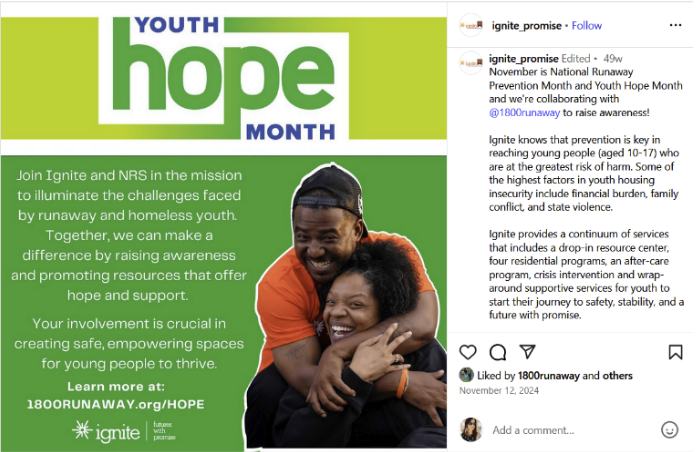
Every November, Ignite participates in Youth HOPE Month in several ways. Youth and staff will show support for youth experiencing homelessness by dressing in green on Wear Green Day (November 13, 2025). Also, they use social media to raise awareness and educate audiences about youth homelessness and elevate resources available to young people in crisis.
For more information about Ignite, visit https://www.ignitepromise.org/.